Puerto Rico- Surprising and Delightful

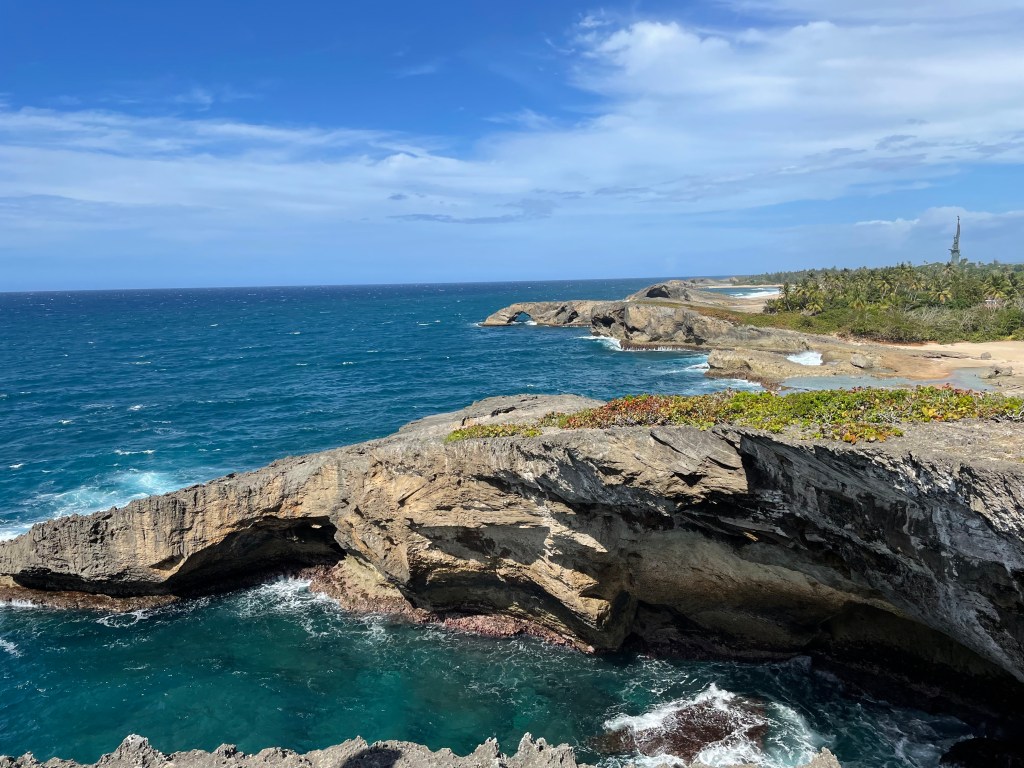
Taking in the seascape and exploring caves at Cuevas Del Indio

We went to Puerto Rico in May 2022 for a work-cation. We knew Puerto Rico was a beach holiday destination and had a cute little “old city”. After going to Hawaii, I didn’t think that any other island would live up to the standards that Hawaii set for us. But honestly, Puerto Rico was way better than what we thought. It has a very different vibe from Hawaii, and is perfect for a 4-5 day vacation just to get away from the May chills of the Northeast US. And to sweeten the deal our round trip tickets were less than $150 for the two of us at the time so we booked the tickets a couple of weeks before, and prepared a rough itinerary and prepared to depart.

The following few paragraphs are from my live journal that I updated on the go while in PR.

Day 1: Landed on Sunday -11 pm, picked up our car rental and drove up to Isla Verde to get breakfast- at a cafe called 787 where we got some iced coffee, Tiko’s empanadas and some green tea for me :). The girl who took our order was kind enough to give us a marzapan biscuit. Now driving to Cuevas del Indio to see a cave.

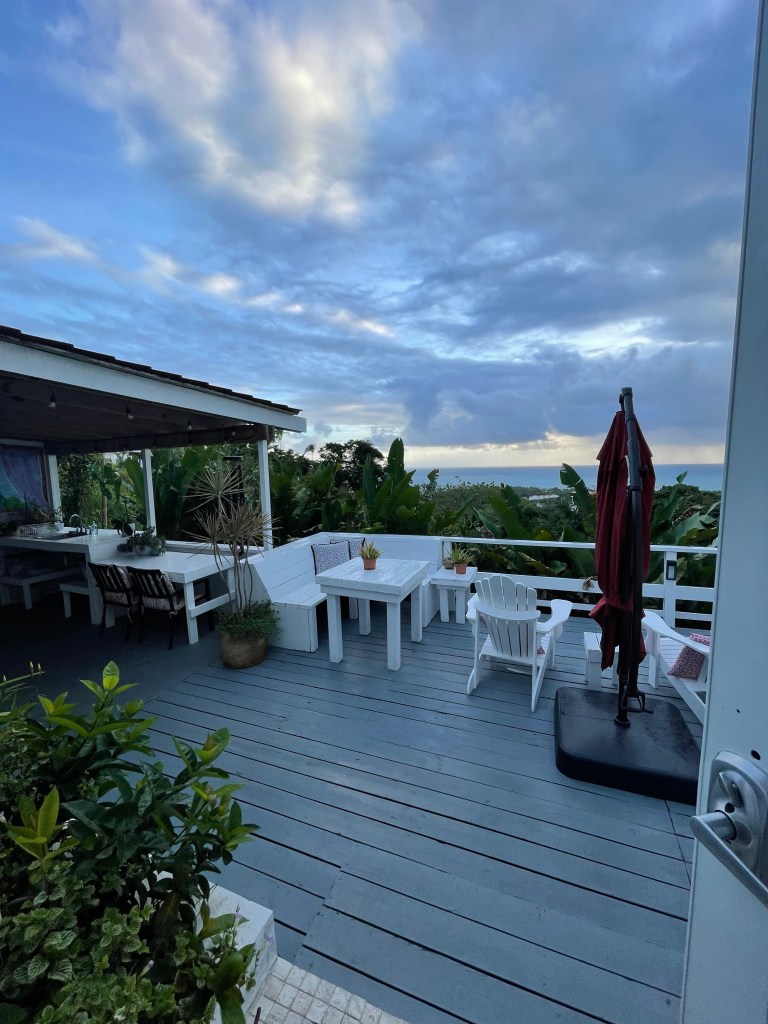
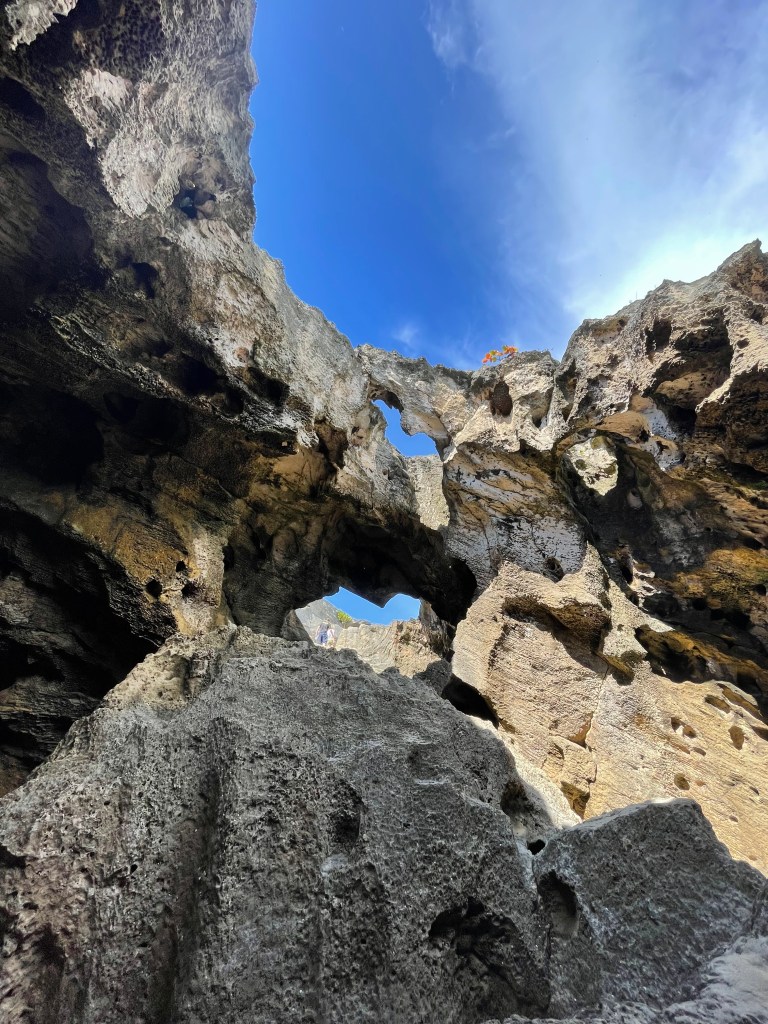
The caves were incredible !! See photos captured. We did a little crawl through the holes in the rocks and my heart was racing!! On the way back we stopped at a stall and got some famed Puerto Rican Pinchos ( chicken skewers) and pina colada (which are apparently invented in Puerto Rico). We drove up east to our Airbnb which is an incredible and special place with indoor outdoor living spaces set high up on a hill overlooking the Luquilo beach.
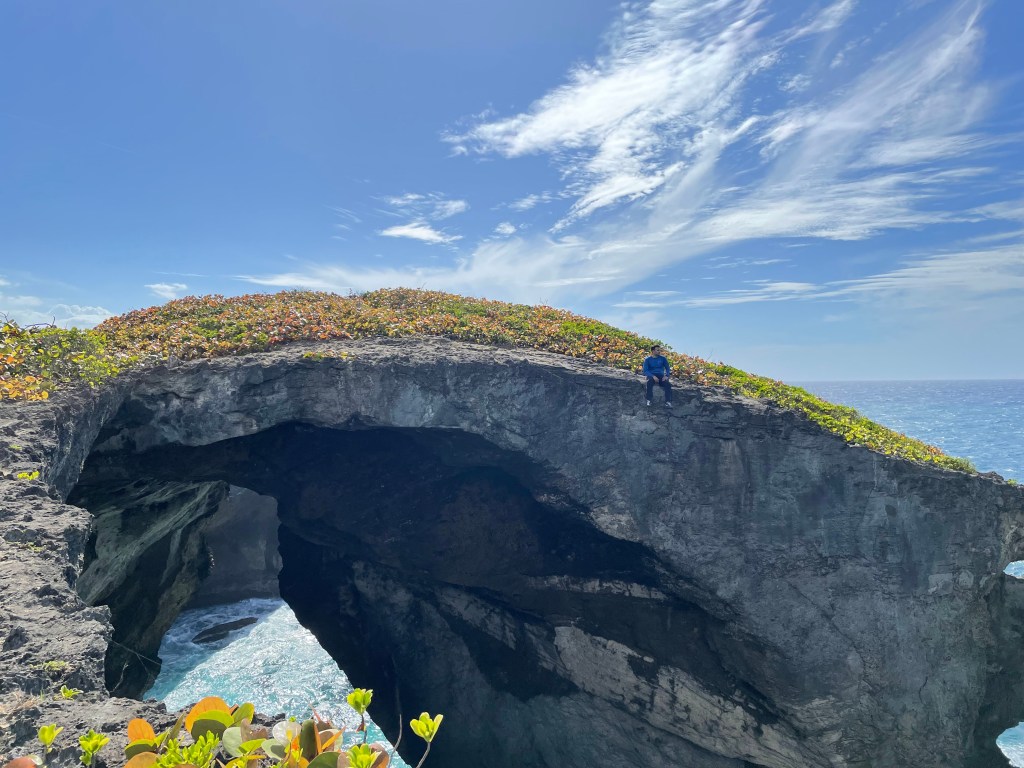
Pratik, chillin with his thoughts

We took half an hour to get ready and drove to San juan where we had reserved a slot for salsa classes. We both kinda sucked but got it somewhat towards the end. We walked/ scootered to casita Miramar where we had some amazing delicious Puerto Rican food – some plantain mofongo, chicken stew, some fried taro balls, pork dumplings with taro casing and chicken turnovers and Pratik snagged a bottle of hot sauce🙈

We scootered back to the car and drive back to the Airbnb to retire for the night.

Day 2: we woke up early for a hike to El Yunque national forest peak.. Pratik got me some breakfast from a deli down the road and we set off.. the hike was going for me and my poor Hamstrings but we made it to the top and beat the crowd in about 2 hours 20 minutes. We stopped for breakfast at 18 Degrees juice and had some smoothie bowls and smoothies.
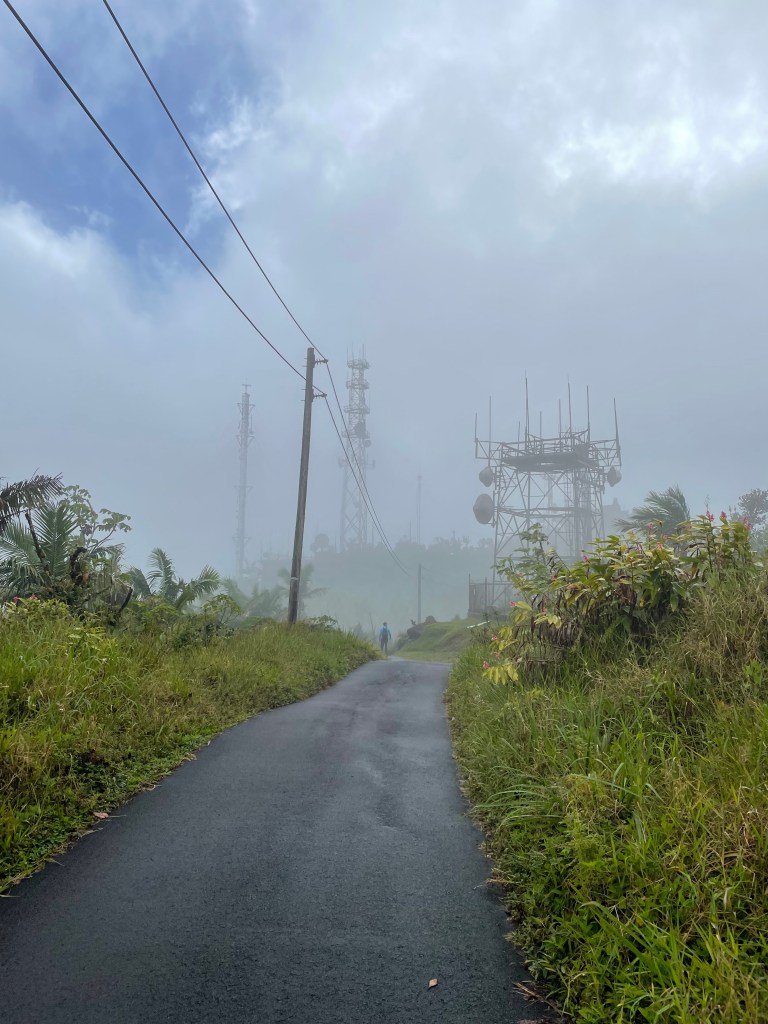
Hiking in El Yunque National Forest

Once we got to the Airbnb we changed and went to the hot tub and slept in there.. after waking up we went down to the luquilo beach where I continued reading a book and Pratik took a nap. We had some street side pina colada

We came back to the Airbnb to freshen up and change before dinner and went to Fajardo- el estacion or “the station “. We had some delicious pastelillo and chicken wings. After that we went for a night kayaking tour to see the bioluminescence in the seven seas area.. we couldn’t see much because the weather conditions were not right but it was an amazing experience nonetheless
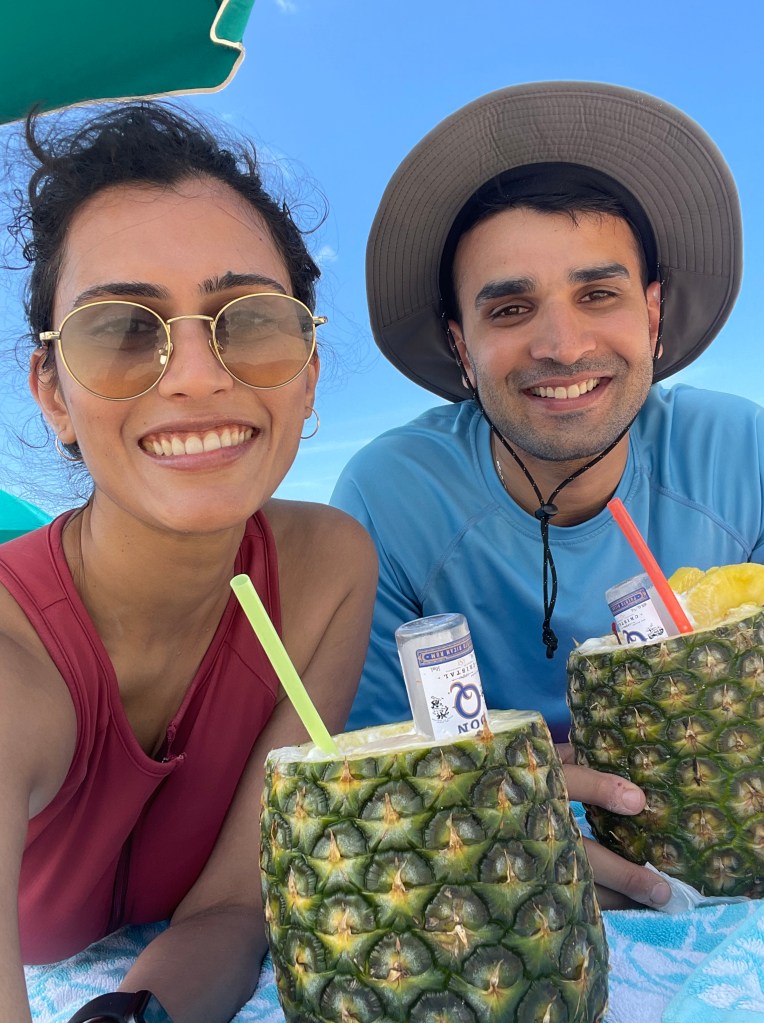
Beach day with our Pina Coladas

Day 3: Today we were working so we had decided to take it easy and keep the activities to a minimum. After waking up around 6:15 am, I sipped on some tea.. Pratik woke up later and we went to get coffee and breakfast nearby. Most places didn’t open until 9 so we just got coffee (chai for me) from this coffee shop called Coffee Therapy. Then we stopped at 18 Degrees again and I got some juice and Pratik got an açaí bowl.

We started work from the Airbnb and hung out near the pool and on the hot tub until about 2pm. We decided to go to San Juan and work for the rest of the day and take our meetings from there because we had a sunset walking tour scheduled in the evening.

Old San Juan was amazing.. after the tour where the tour guide showed us some of the main historic landmarks and told us stories about San Juan we were sooo tired. We got dinner at a restaurant called el casita and then went to “the factory” to try our basic salsa moves on the dance floor. It was a lot of fun! We then got some icecream for Pratik at “Anita” -because he complained that he hadn’t had any dessert this entire trip- and drove back to the Airbnb
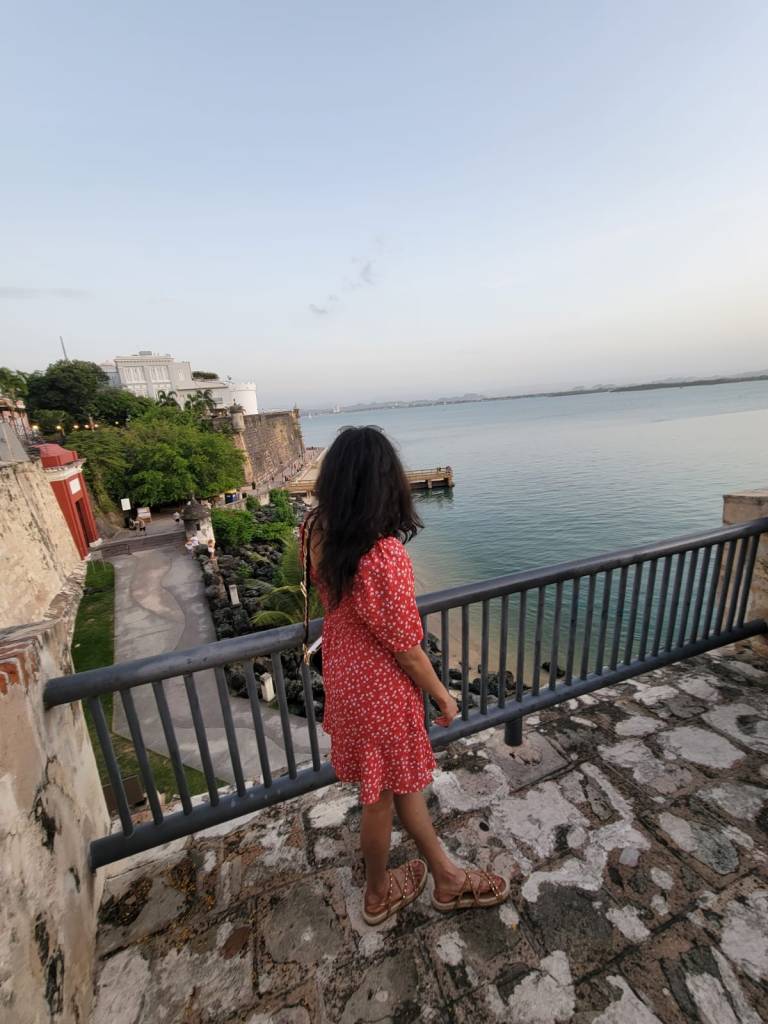
Day 4: our last day in Puerto Rico. We woke up and Pupper (Pratik) went for a walk to get coffee. I woke up around 7 and started getting ready and packed up. We came to old San Juan and after going to three cafes which didn’t have free WiFi we ended up at Starbucks to work. Once I was done with my call around 12, we set out walking in old San Juan once again but this time to take photos all over, and we got some amazing ones!

We came to Cafe El Punto for lunch and ate a delicious avocado stuffed chicken dish with rice and beans -and some fried paneer – yeah I knoww!! After that went back to work at Starbucks for about an hour and then went shopping for souvenirs. I got a hat! And Pratik got 3 for 12$ t shirts and candies! We drove back to the airport and got back.

Highlights

  • Old San Juan and Cuevos del Indio for the endless photo opportunities
  • El Yunque for the greenery and a moderately intense hike
  • Food- Pinchos, Mofongoes and Pina Coladas
  • Beach- Luquillo beach for the gentle warm waters and people watching
  • Night Kayaking- even if you dont see the bioluminescence, kayaking through the ocean and backwaters feels adventurous
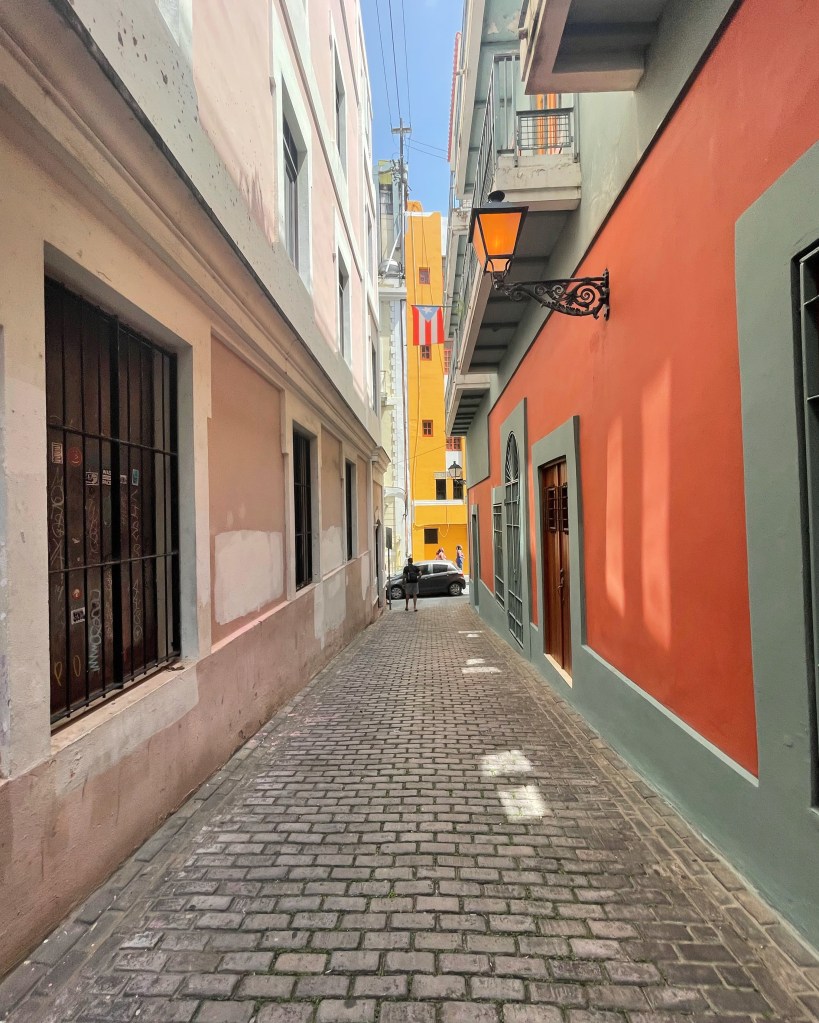
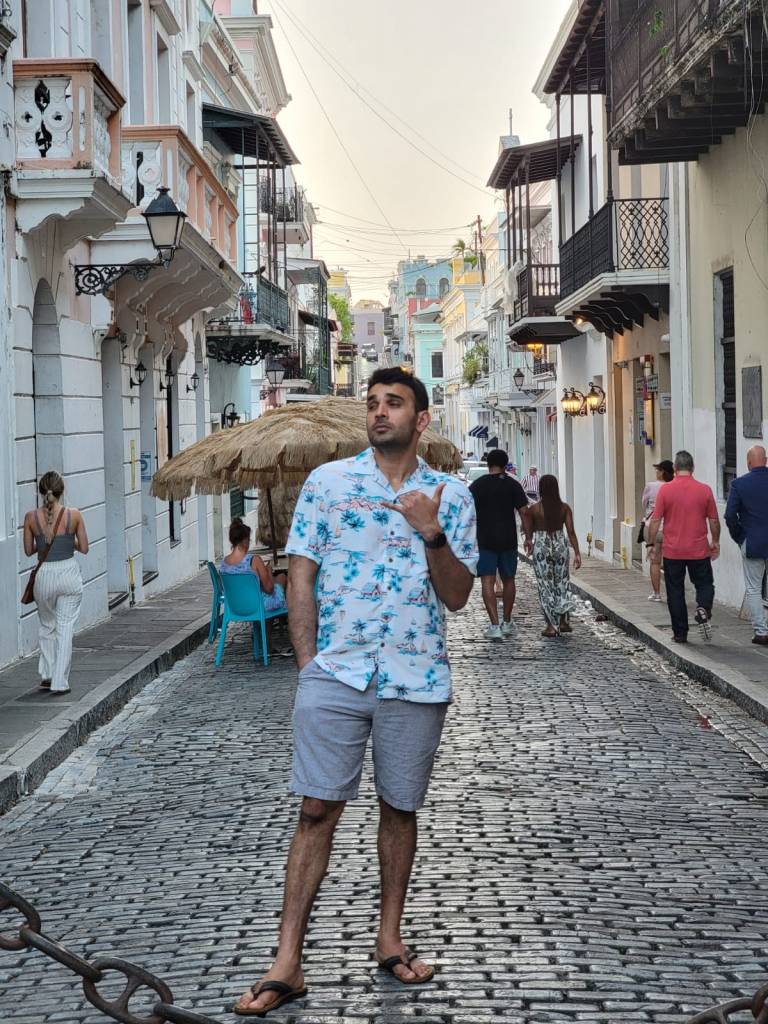
The one where Pratik posed
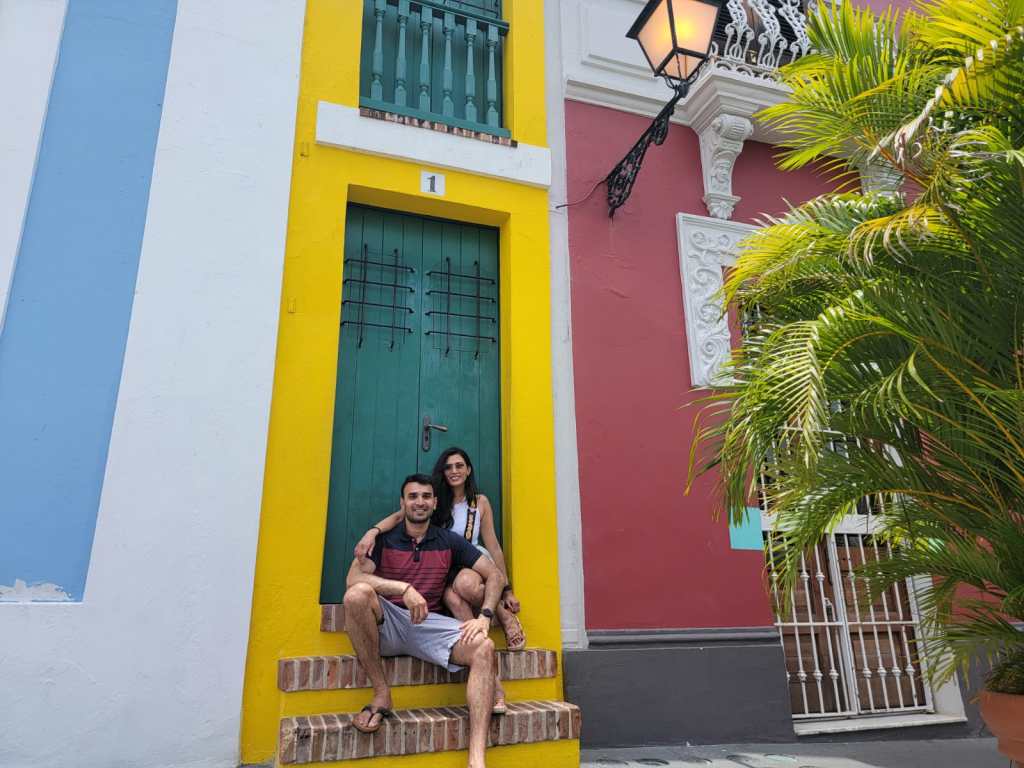
Not cheesy but cheesy enough
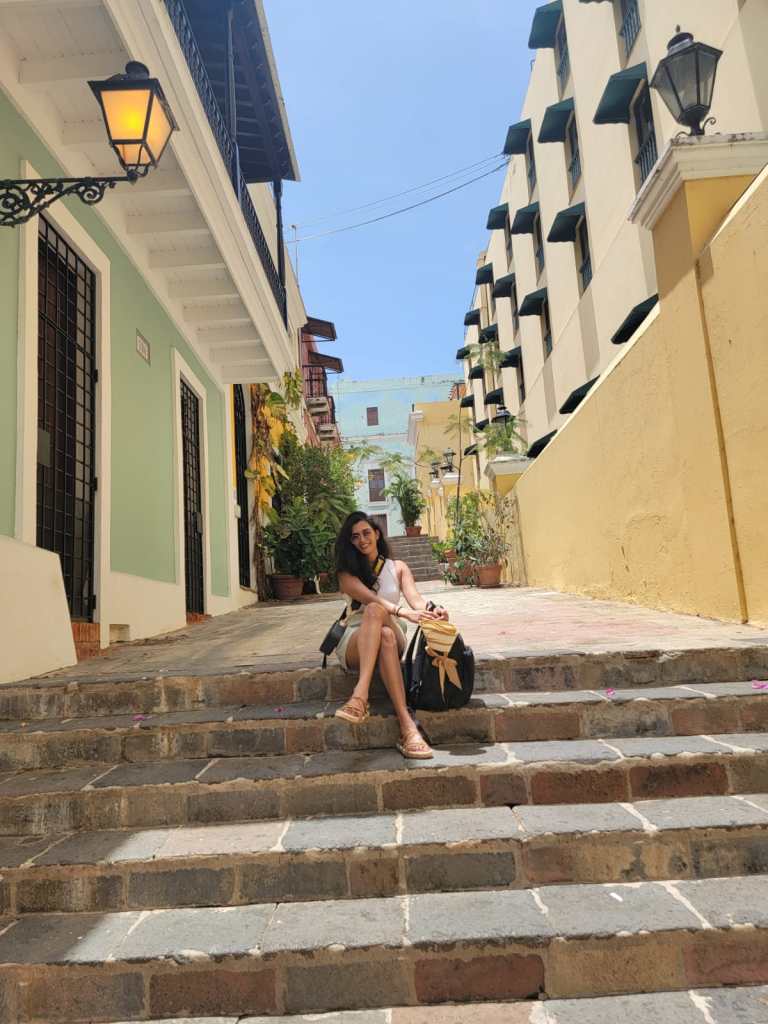
I was tired!

A reflection of my learnings in Brasil and Chile

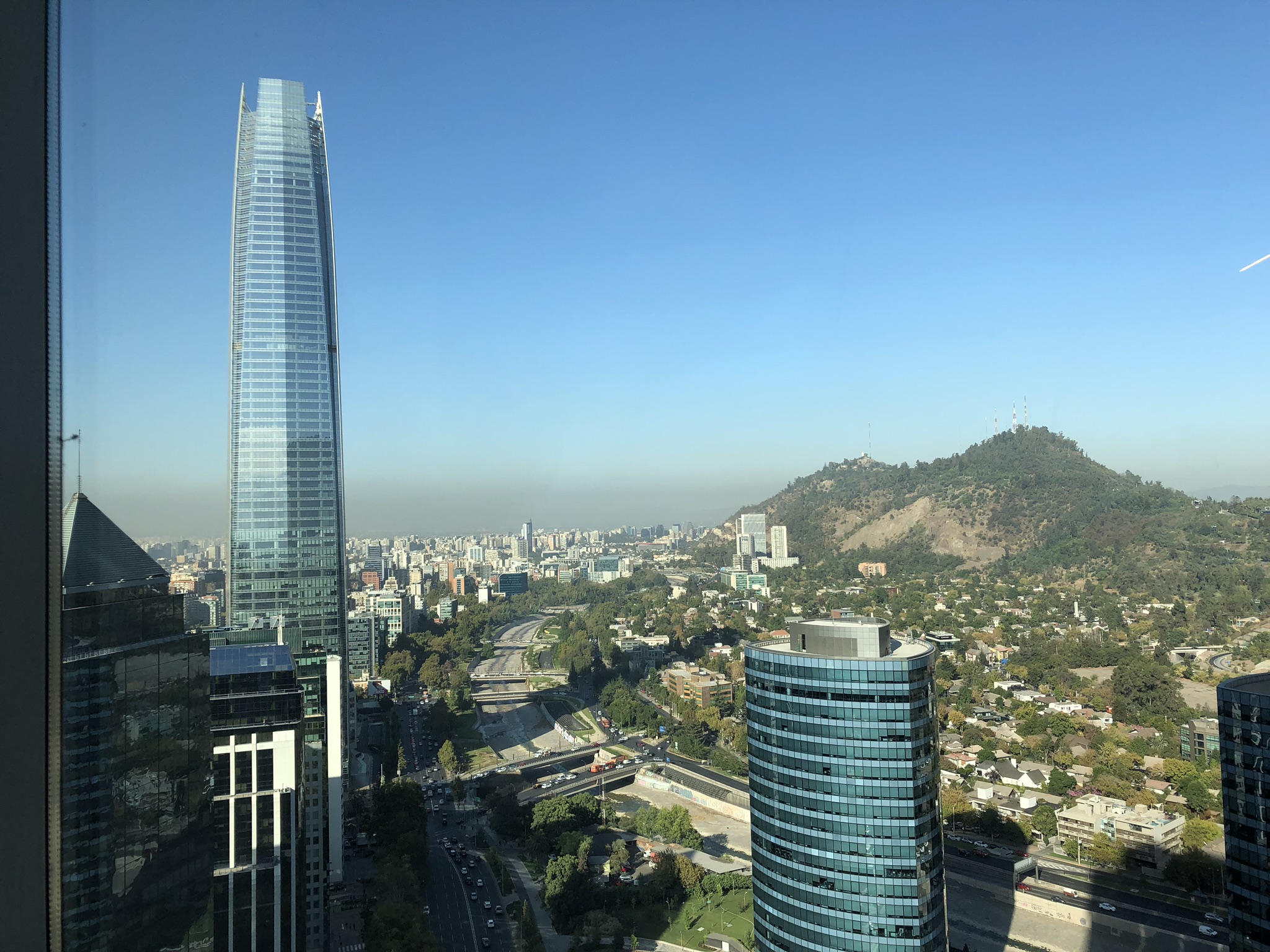
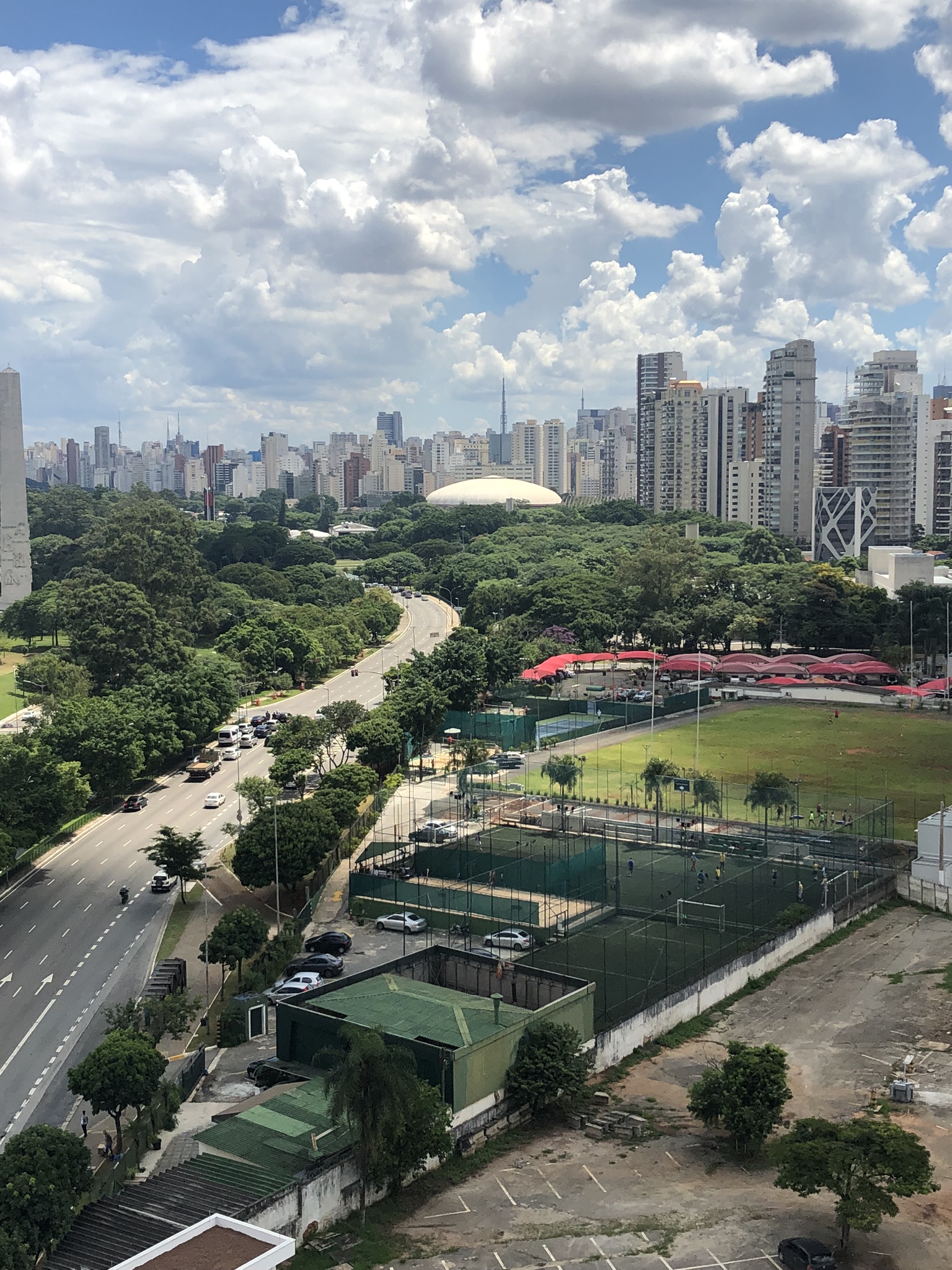
If Sao Paolo and Santiago were people, I would sum them up this way- Santiago is like a friend you may meet occasionally- cordial and friendly but reserved and business-like. And Sao Paolo is that long-lost friend who always makes sure you have the best time when they are around. The food!!.. Oh, Chile was a wonderful city with wonderful food and warm and welcoming people. But the locals in Sao Paolo, on multiple occasions, went a step ahead in making us feel welcome and our visit, eventful. During the immersion, many of the companies we visited in Sao Paolo, scored extra points for hospitality- there were snacks and coffee or invitations to store openings.

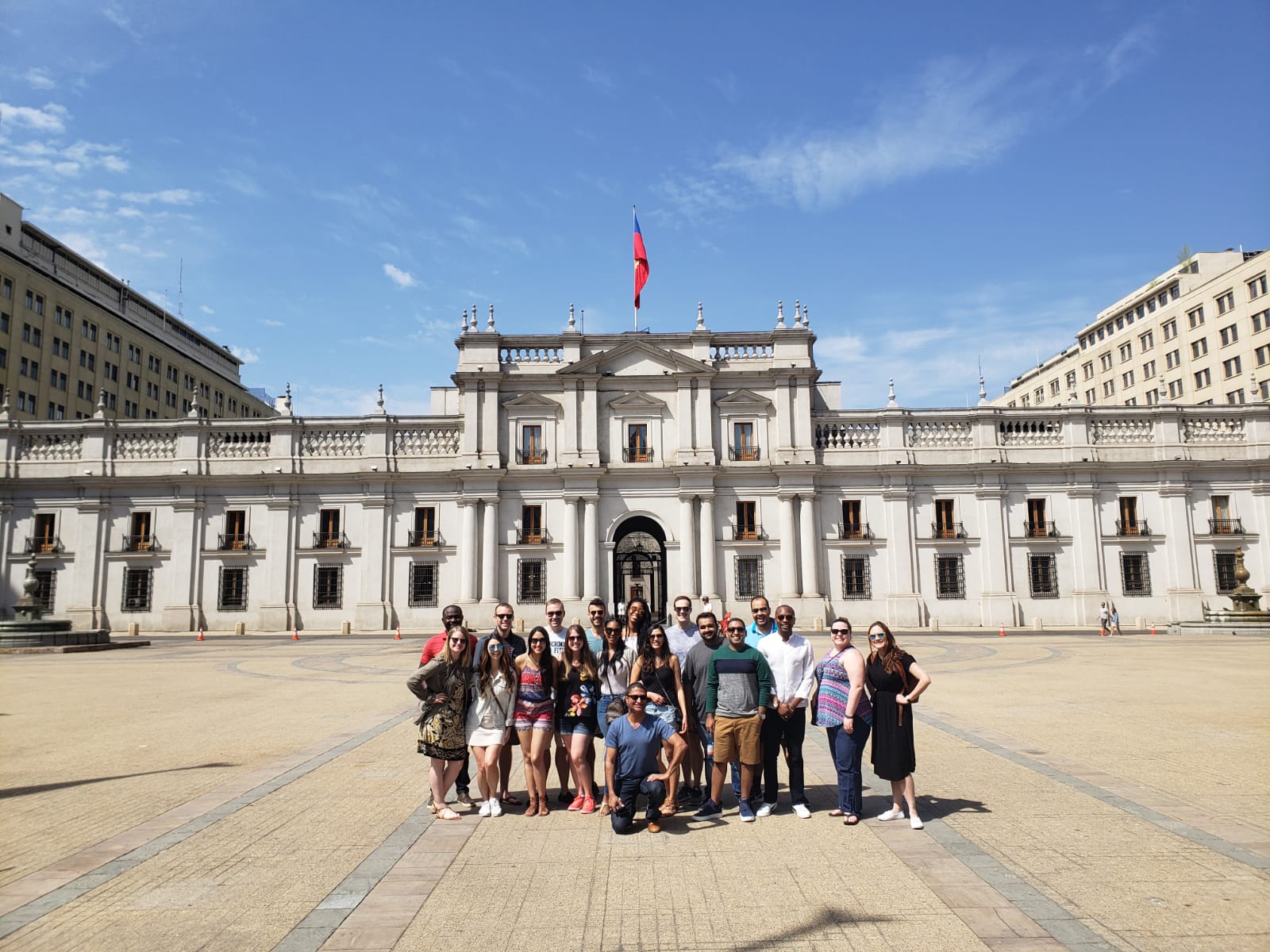
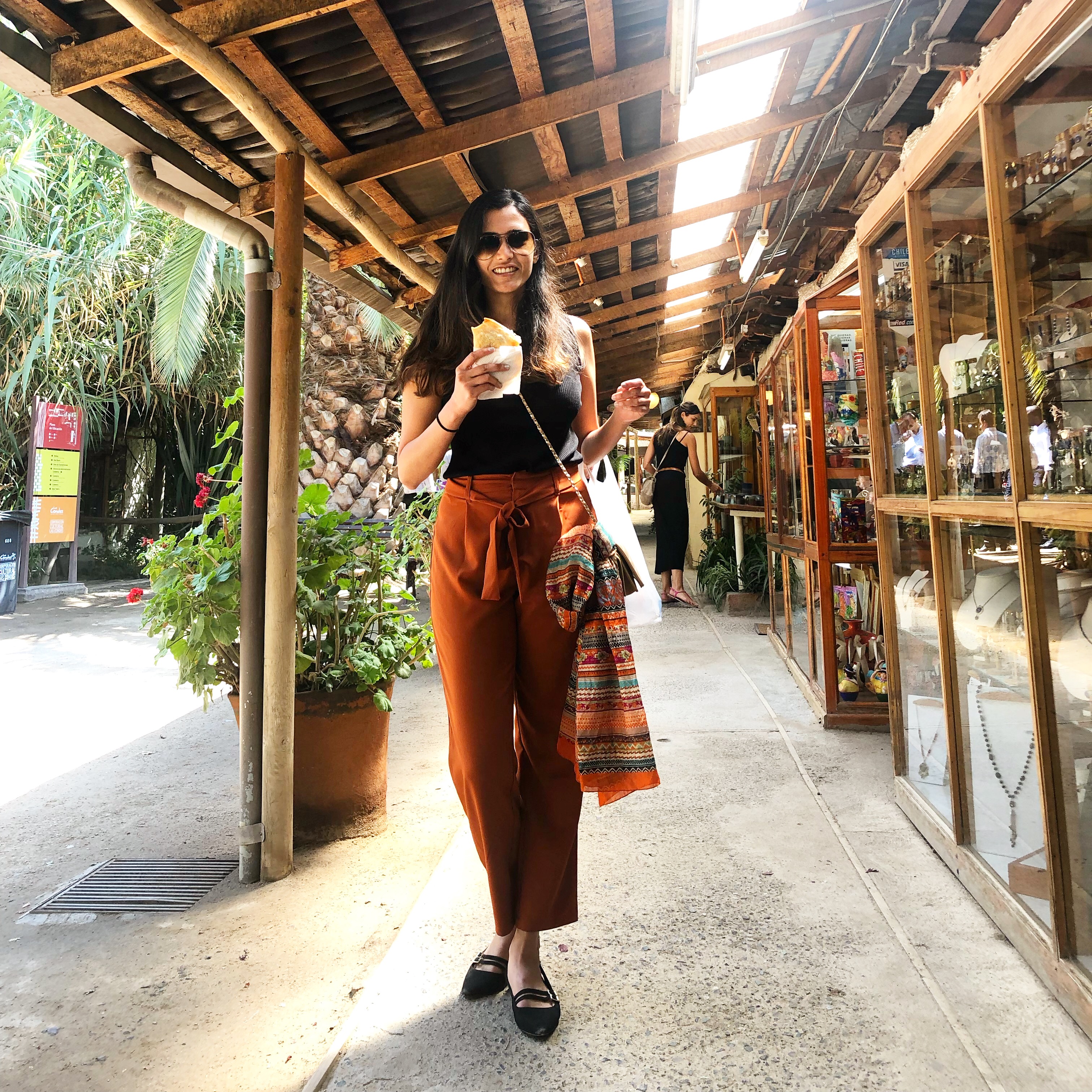
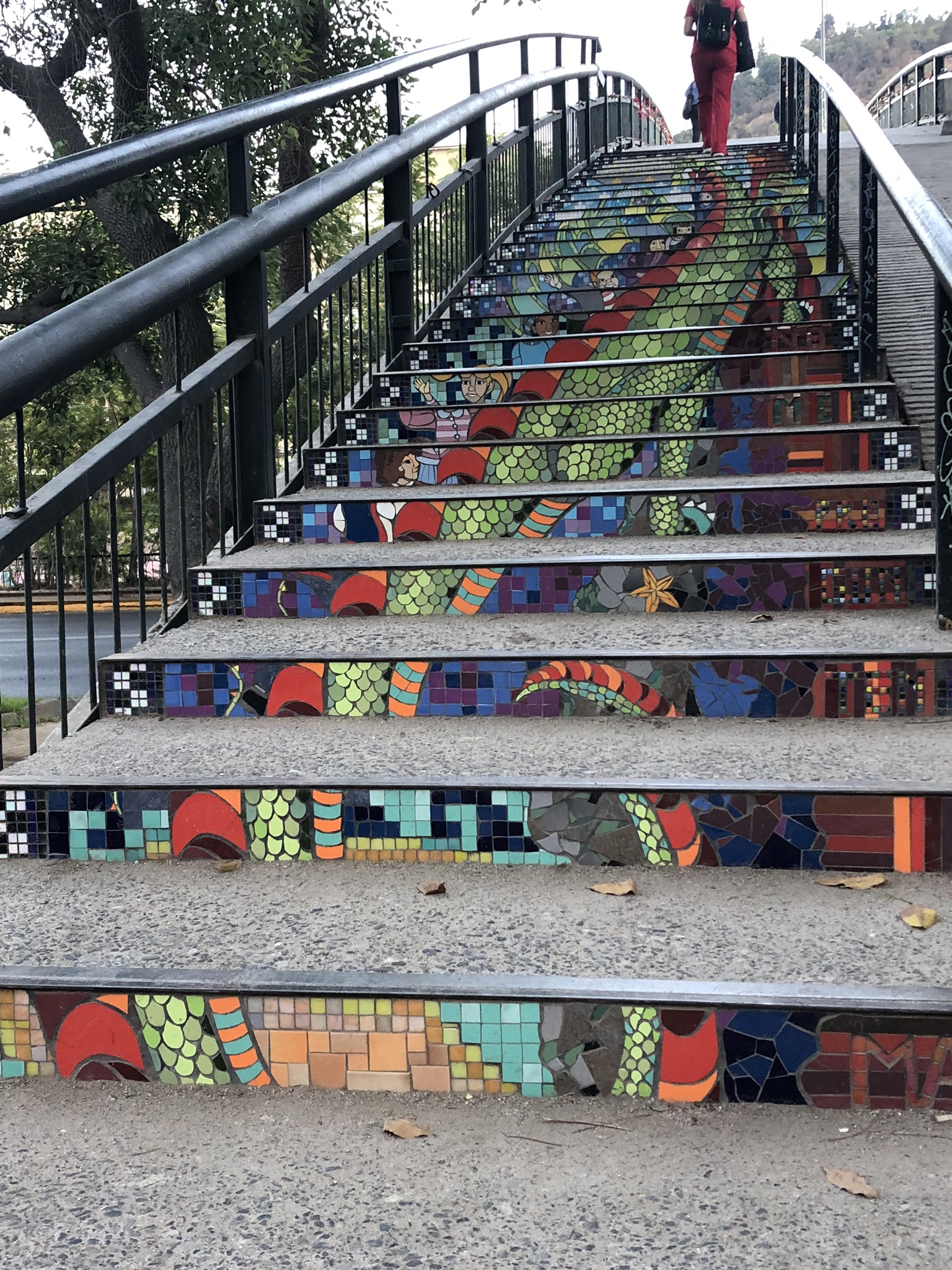
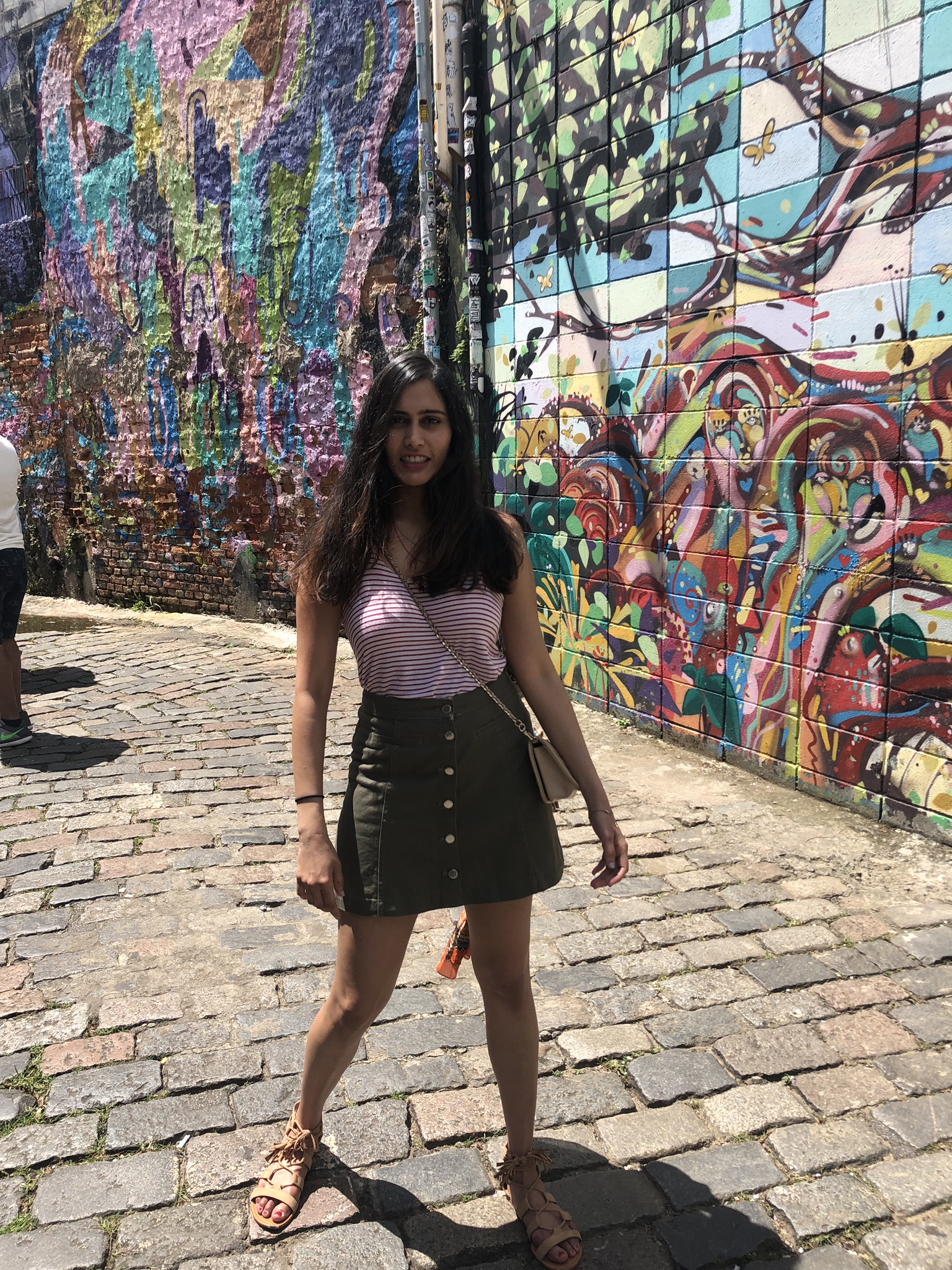
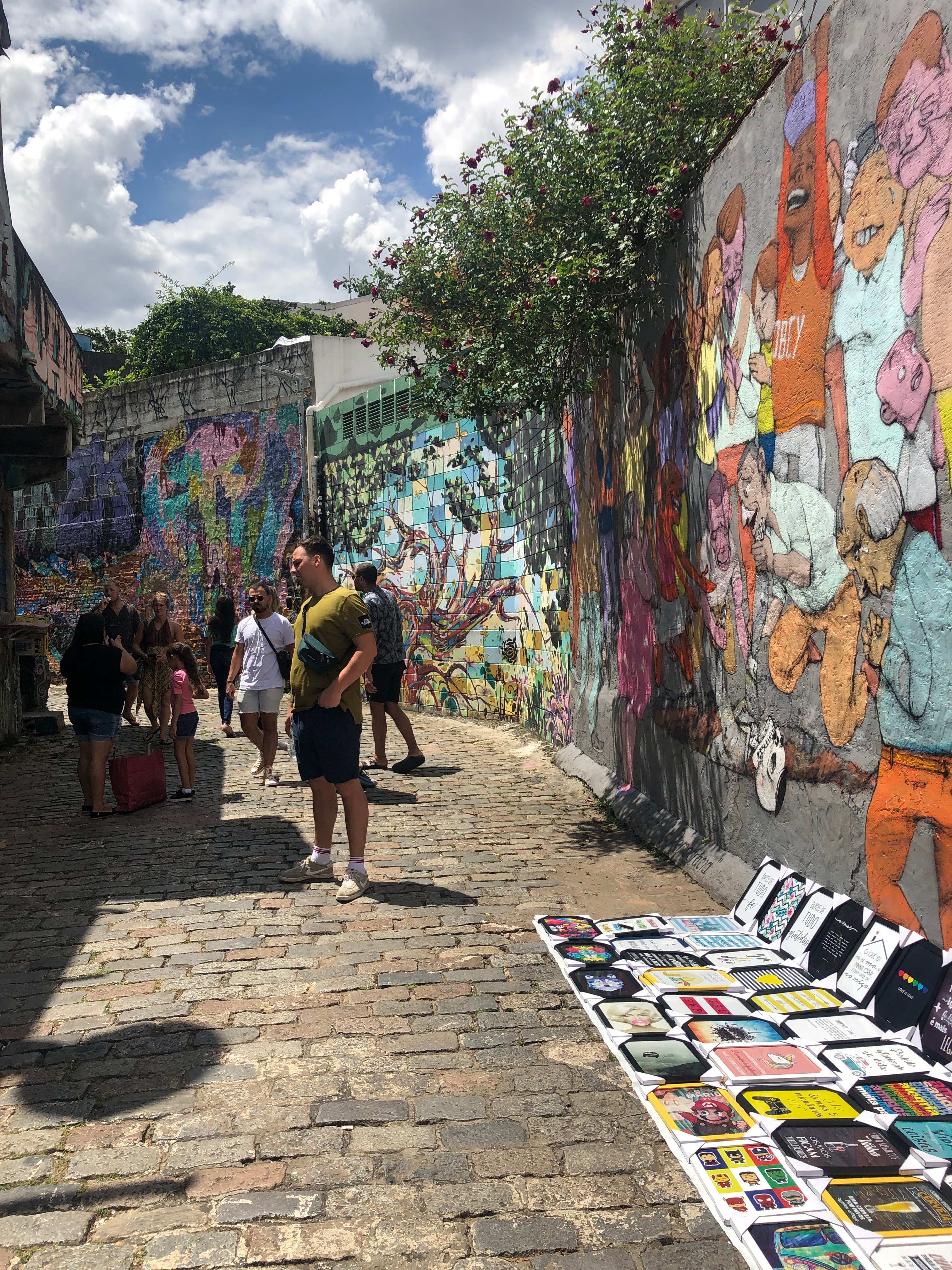
In terms of culture, Chile is like a Spanish city with Italian food. The Spanish influence is very prominent through building architectures, language, names of shops etc. but there is very little trace of the native Chilean culture in Santiago. The first time I even interacted with the native Chilean culture was at the Los Dominicos market on our last day in Chile, which I thought was unfortunate because it could provide a big boost to Chile’s tourism industry, the same way the Incan cultural influence boosts Peru’s and the Mayan boosts Mexico’s. In contrast, Brazil is a mish-mash of this and that – like an interesting smoothie blend with exotic and indigenous ingredients. Rather than uprooting the local culture, when the Portuguese colonized Brazil, they intermingled with them. Over the years, more races arrived in Brazil and there was more mingling- leading to an increased acceptance of not only race but also LGBTQ rights. There is also an underlying casualness about the aesthetic of the city. In a lot of cities, especially in India, graffiti is viewed as a form of vandalism, but in Brazil, they are a form of art and there is a whole alley dedicated to this in Vila Magdalena.

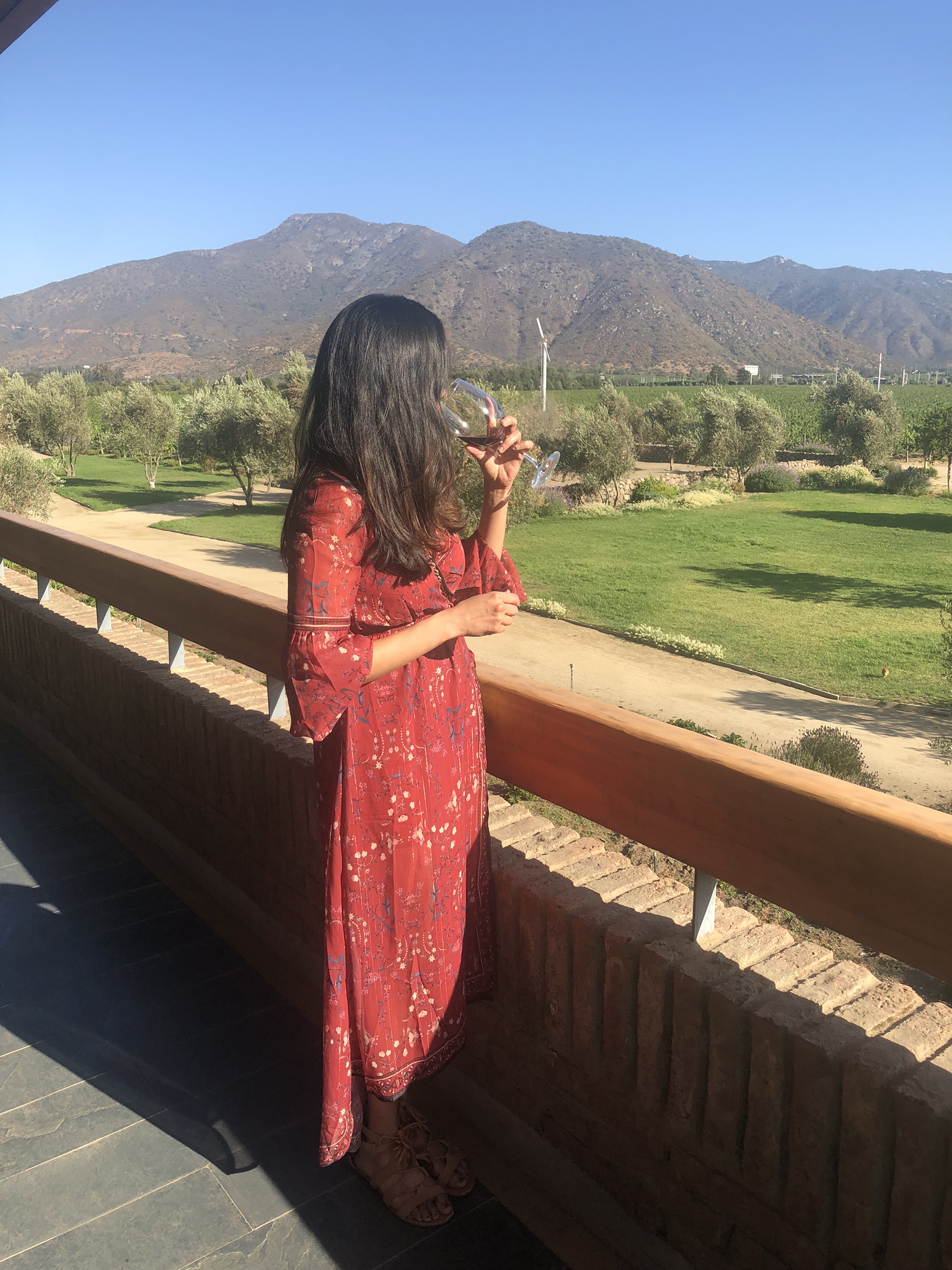
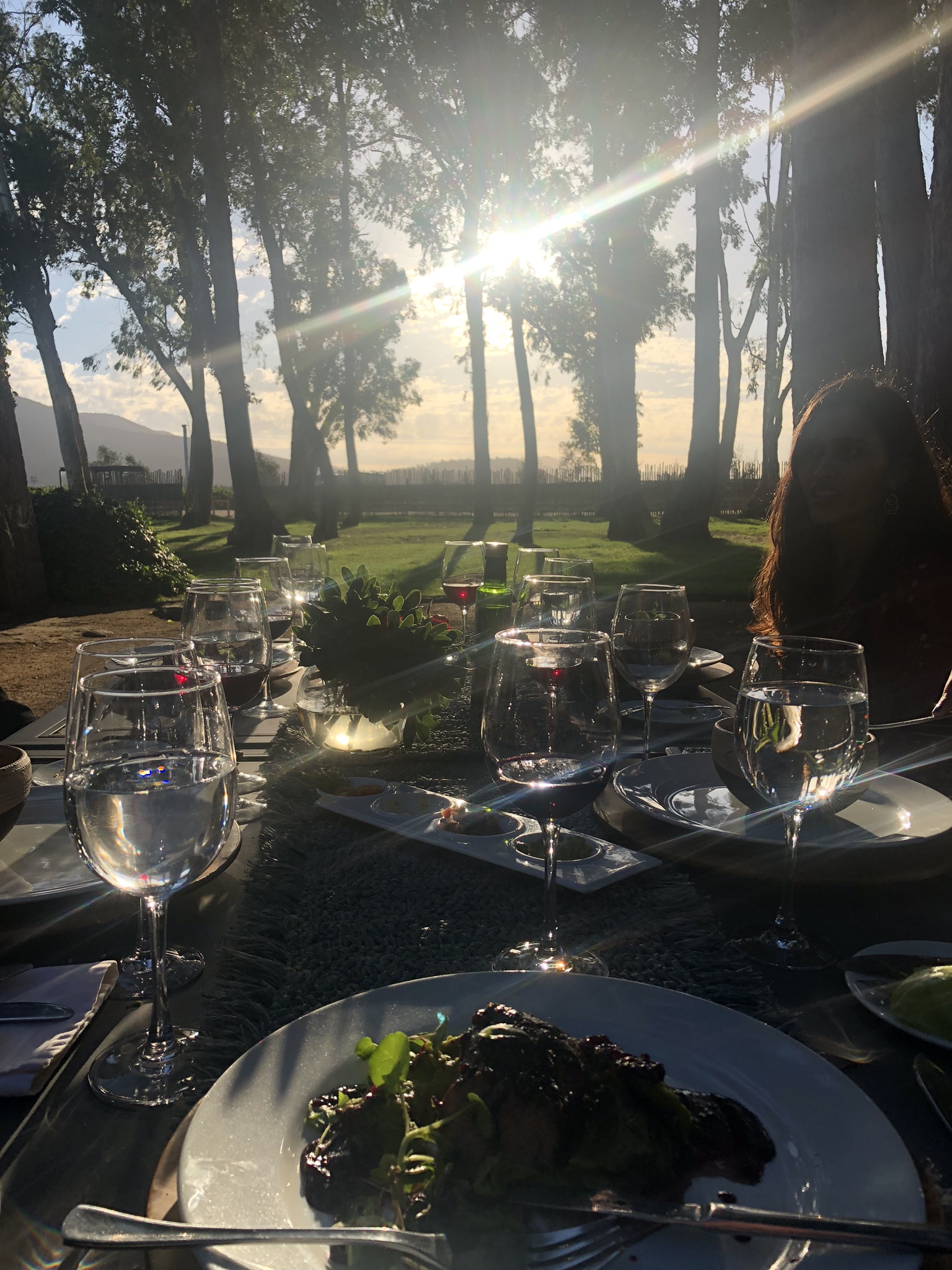
On the business front, sustainability was the buzzword at both locations. Many companies we visited in both locations, spoke about sustainable development and practices, but the reasons for adopting it were varied. For example, Emiliana Vineyards adopted sustainability in the best interest of its farmers, Eggless started as a solution to the problem of restriction on homemade mayonnaise, and Tembici started a ride-sharing service, to promote an environment- friendly and a fun transportation alternative to motorized transport. In the case of Chile especially, it is a cause which is increasingly becoming relevant among young adults and consumers of brands. Thus, it was encouraging to see that sustainability is becoming more and more important to businesses across different countries albeit for different reasons and I hope for the sake of the future generations that more businesses draw inspiration from these companies in developing their own sustainability agenda.

I was quite fascinated to learn that Brazil’s initial growth, like that of the USA, was based on self- sustenance, and self-reliance. Then why did it not become a superpower like the USA? The Chicken-fly syndrome is probably one of the reasons- Brazil takes two steps forward and one step back- over and over again in history. Unlike the US, Brazil started developing its service industry much later. For a very long time, it relied solely on exports of meat, coffee, wood and other commodities, which made it susceptible to economic volatility. Rampant corruption has also reduced people’s trust in the system and the consequent economic fluctuations have led to emigration. As a result, Brazil’s working population is aging. The language may also be a huge barrier- within LATAM and outside of it. In LATAM, the Portuguese speaking Brazil is surrounded by Spanish speaking countries. Outside LATAM, many English-speaking nations do not comprehend Portuguese as well as they do Spanish. This may be a limitation in getting skilled labor to work in the country.

As in China and India, politics have a big impact on the economic stability in Chile and Brazil. A stable political environment is important for the growth of local businesses and foreign investments. Chile has been an economic frontrunner in Latin America thanks to stable governance, which switches only between two extreme types of governance- right wing and left wing. Chile is the most stable of the Latin American countries which is why it attracts most foreign investment despite its size and small population. On the other hand, Brazil’s governance is socialist, and the system has 35 different political parties coveting for governmental power. The government provides free education, healthcare, and pension support but the pension reforms and tax reforms which are currently underway will decide the future of the Brazilian economy. In the recent past, its economy has suffered a setback due to certain government reforms and corruption scandals. Setbacks like this often put a halt on Brazil’s growth. Once, deemed a front runner among the BRICS nations, Brazil seems to have lost the momentum today. The population is also aging as a result of the low availability of high skilled young working adults. Those that remain in Brazil, consequently are “overpaid” and experience accelerated career growth. We observed this trend among several speakers we met from Cielo and from Movile.

With economic growth reaching saturation points in the developed markets, companies and start-ups are looking at developing and emerging economies to set up business. As a business professional, when it comes to setting up a base in Latin America, some of the most important factors to consider are the political stability, volatility of the economy, access to resources and market size, among others. Favorable government support and access to funds to start and grow the business are plusses too. Chile is an attractive base in LATAM because of its favorable government initiatives for new businesses and access to the rest of LATAM. Chilean people are considered more educated, business inclined and economically well to do. They have more purchasing power relative to the rest of LATAM. Spanish is also the most commonly spoken language in South America and one of the most spoken languages in the US and Europe after English. Despite a smaller market, businesses can still have an opportunity to expand to neighboring LATAM countries. Brazil, even though it has the largest population in LATAM, is risky for businesses because of the volatile nature of its growth. The language barrier and the limited human resources may also be a deterrent to businesses looking for a base here. Even our host from Cielo believes that Brazil is past its peak. To businesses and start-ups looking for a large market with access to human resources, and favorable governmental policies on foreign investment, India and China may be a better option than both, Brazil and Chile. On a smaller scale, however, if they are looking at acquiring the South American market, Chile would be the better option over Brazil. Moreover, the stability of Chile is already attracting immigrants from other Latin American countries. If the increased governmental funding for start-ups and initiatives supporting businesses continues along the same trajectory, there may scope for more immigration of skilled labor, more businesses and diverse culture with a promise of great quality of life. There… Chile ticks all the boxes!